


Nritya Spandan Kala Nikunj
Nritya Spandan Kala Nikunj
Nritya Spandan Kala Nikunj
Nritya Spandan Kala Nikunj


Kathak
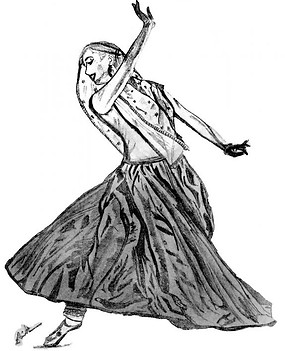
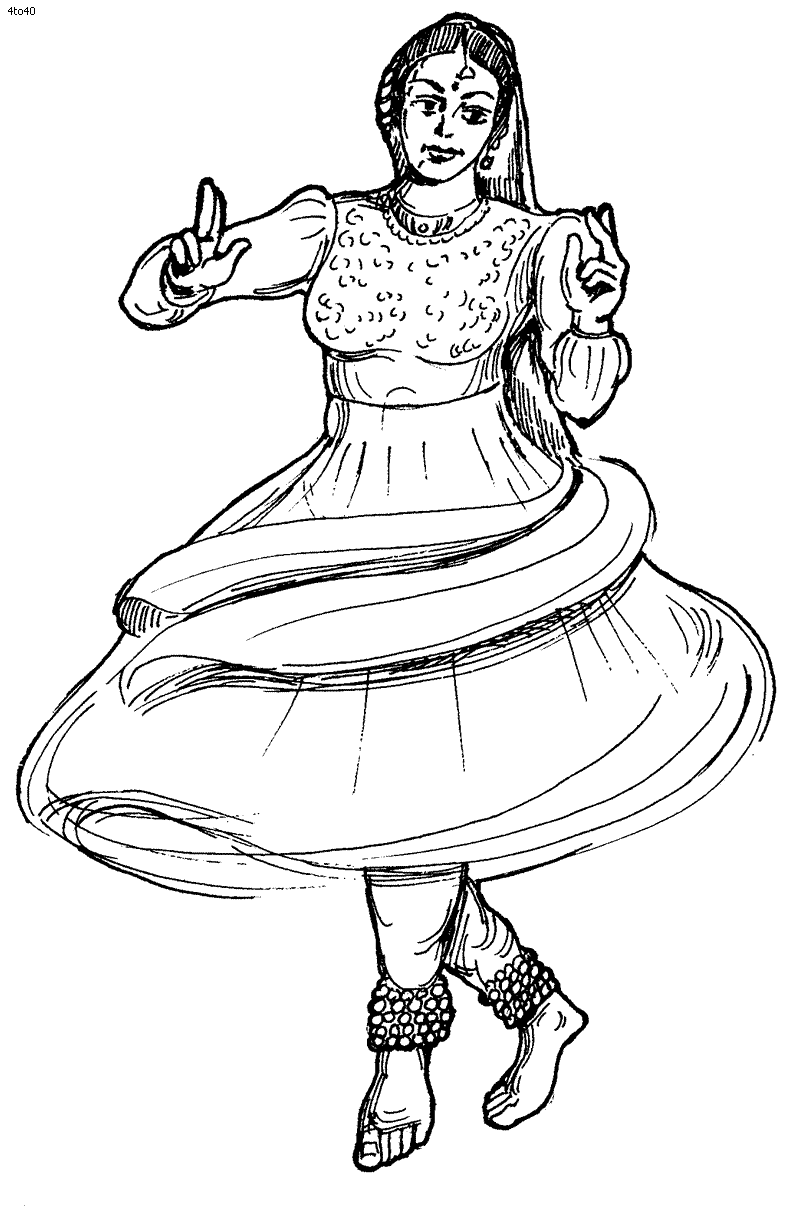
Kathak is known as one of the ancient traditional dance forms of India and it has its own status and reasons for being so. In the literature of languages such as Sanskrit, Pali, Prakrit and also Nepali one can find the word ‘Kathak’ and from that, three main specialties of the word can be derived such as, story, enactment, and preaching. On the basis of these three things it was observed that the preaching is easily made reachable and understandable to the common man when combined with story and enactment of it. Hence in North India there were temples where such preaching used to take place. In the olden times, in the Vaishnav temples, people were employed to conduct preaching through the medium of song and dance. They were hence known as “Kathekaris / कथेकारी” from which the word ‘Kathak’ has been derived. This was a hereditary occupation for the Kathekari families. They also taught this art form to the devdasis in the temple. The Kathekaris depicted ancient mythological stories through their art form. This tradition is still practiced in the temples of Ayodhya and Nathadwara. To make these portrayals of the stories more interesting many kinds of music instruments are also used. Ghungroos are tied to the ankles, and the dancer dances to the rhythm of various taals, which collectively leaves a mesmerizing impact. The devotees in the temple also used to get lost in the rhythm and become completely engrossed in the story. Male dancers used to enact different roles; while playing a female character, they used saris and dupattas This era was called the ‘temple tradition’ and it formed the core of ‘Kathak’ and strongly developed the religious side of this dance form. Many Bhajans, Pad, praises of Gods and Goddesses and many kinds of literary and musical compositions were added to the literature of Kathak in this era. In and around the 13th century, Islamic rule took over which also had an effect on ‘Kathak’. This dance form has always been affected by time periods, regions and situations. The ‘temple tradition’ of Kathak experienced a transformation. Temples were being demolished and the number of temples was rapidly decreasing. The Kathek artistes the temples then started presenting their art at different locations and places. They started seeking refuge in the palaces of kings and emperors. To prove their expertise in front of these kings they made a lot of changes in their art form, especially in the dance. Whilst pleasing the royals, a completely new form of this dance emerged, which was more difficult and miraculous. For example, doing the footwork at a very fast pace and speed or showcasing various pirouettes at an astonishing rate and climaxing on the beat of the sam / सम. The only intention behind this was to please the king. The religious side of this art was completely lost and mujra / म ु जरा, salami / सऱामी, tode / तोड़े, etc. took its place. On the wish of the kings there were also changes made in the costumes and outfits for the presentation. The simple outfits that were prominent in the temples were replaced by gaudy ‘Anarkalis’, ‘Kurta’, ‘Ghagra’, ‘choli’, etc. During the Mughal rule, artistes had to receive patronization and support from the kings and nobles. Due to many Muslim rulers temperament for lust, erotic love and ‘anti-Hindu’ instinct, there were new turns in Kathak. The devotional fervor vanished and in its place, bright, easier and effortless presentation of dance, as well as a monotonous romantic element came forward whereas, at the other end, a mechanical approach towards dance gave a new face to Kathak. There was another parallel stream of Kathak flowing in the courts of Hindu states and kings, where the artistes under their patronage maintained the age-old devotional, soft, sober, traditional dance presentation. The assimilated development of Nritta (pure dance) and Nritya-Natya (emotional and dramatic expression) which is a very distinct feature of the new era in Kathak, is definitely a finished product of these two parallel streams in the period of Mughal rule when these two major aspects of Kathak were given prime importance. This was the period when the illustrious gharanas of Kathak, Lucknow, Jaipur and Banaras, came into existence.
The Mughal regime’s downfall saw the rise of the British in India. Under the British, Kathak artistes literally became shelter-less and the dance began to be performed without any refined tastes and culture, and instead of its artistic term, Nrittya, it started to be called Naach. It lost its identity and above all, the most unfortunate thing was, its glorious history was also systematically destroyed. In such a devastating condition, in the numerous small and big princely states that India was divided into at the fall of the Mughals and the Marathas and while the British were on the rise, some of these Kathak artistes were given shelter by rulers of the small and large principalities. King Chakradhar Sinha and Nawab Wajid Ali Shah made purposeful efforts to understand the essence of this dance style, in addition to giving shelter to the talented dancers. Besides that, they also published various books on Kathak. The veteran dancers and composers like Pandit Bindadin Maharaj and Pandit Kalka Maharaj composed thousands of thumris and once again opened the gates of sweet and romantic devotion (Madhura Bhakti / मध ुर भक्तत), for the common dance appreciators through a rich and expressive enactment (Abhinaya). After the abolishment of these princely states, the Kathak dancers established a direct connection with the people, numerous artistes got settled in different regions and continued their utmost devotion and dedication for pursuing dance as their lifetime commitment. The art form was more and more advertised and spread all over the country. Many new institutes and dance schools were established and it not only helped the artistes earn a living, but also got them the fame, rewards and respect that they needed. It became a global phenomenon and specific curriculums were introduced which expanded the reach of this dance form.


Nritya Spanda Kala Nikunj is the place where you live your passion through Dance and feel re-energise through Yoga.
Here you can learn Kathak, Folk & Semi Classical Dance.


